
In the modern digital economy, the first interaction a potential client has with your
brand isn’t a handshake or a conversation, it’s a loading bar. As search engines
evolve into sophisticated AI-driven discovery tools, the technical health of your
website has shifted from being a “nice-to-have” IT metric to a fundamental pillar of
business credibility.
Welcome to The 90+ Club. This isn’t just about achieving a high score on a tool, it’s
about meeting the uncompromising performance standards that modern users and
search algorithms demand.
What is the 90+ Club?
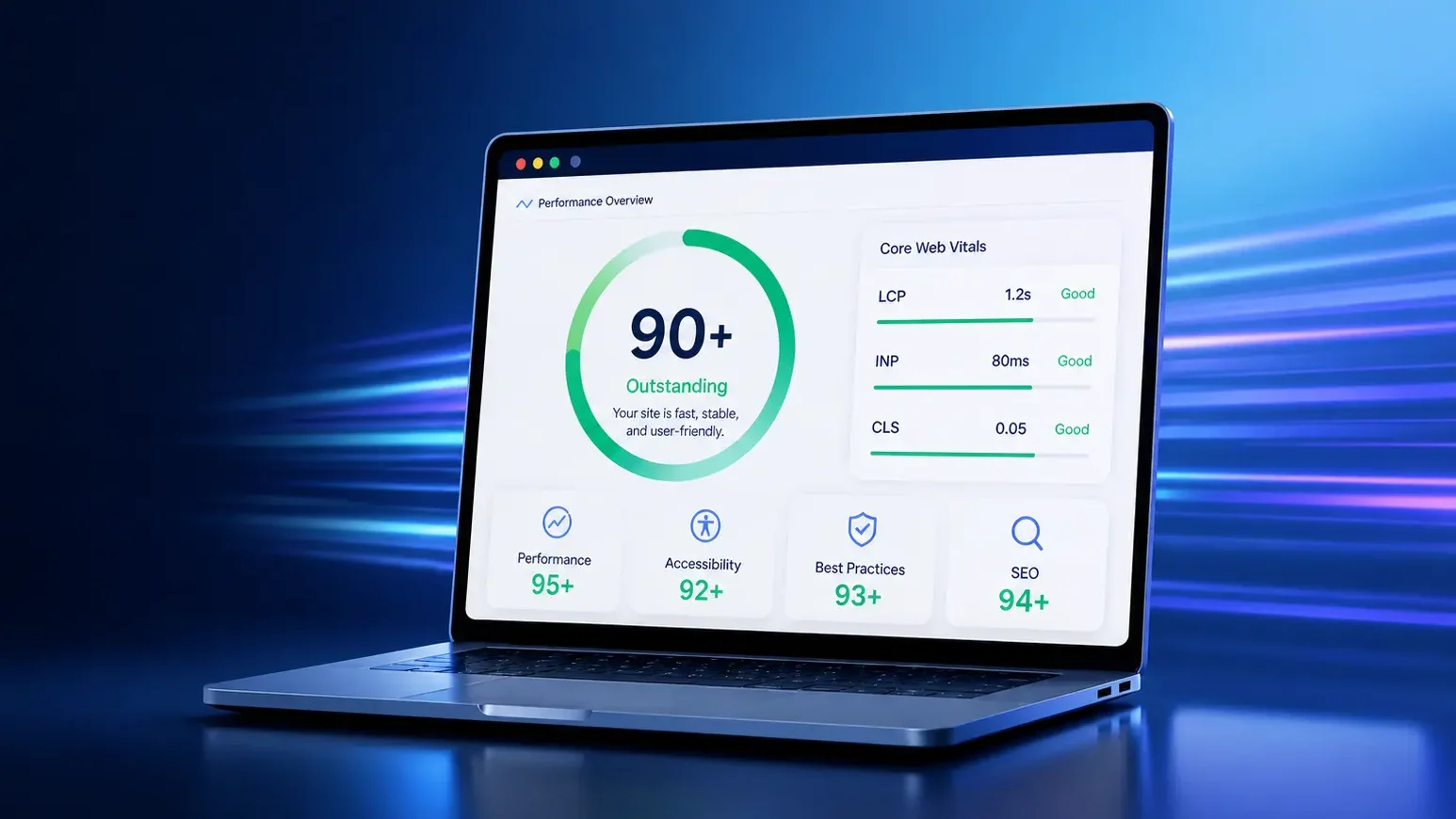
The “90+ Club” refers to websites that consistently achieve a score of 90 or higher
across all four categories of Google’s Lighthouse audit: Performance, Accessibility,
Best Practices, and SEO.
While many businesses are content with “passing” grades in the 50-70 range, the
elite tier of digital-first companies understands that every point below 90 represents a
leak in the conversion funnel.
Why Core Web Vitals are the New “Handshake”
Core Web Vitals (CWV) are a set of specific factors that Google considers important
in a webpage’s overall user experience. They measure visual stability, loading
speed, and interactivity.
1. Largest Contentful Paint (LCP): The First Impression
LCP measures how long it takes for the largest visual element on your screen
(usually a hero image or heading) to become visible.
– The Credibility Gap: If a user clicks your link and stares at a white screen for
more than 2.5 seconds, the psychological “bounce” begins. A slow LCP
signals a lack of technical investment and professional polish.
2. Interaction to Next Paint (INP): The Conversation
INP measures how responsive your site is when a user actually tries to do
something, like click a button or open a menu.
– The Credibility Gap: There is nothing more frustrating than a “frozen” button.
If your site feels sluggish to the touch, users subconsciously associate that
friction with your service delivery.
3. Cumulative Layout Shift (CLS): The Trust Factor
CLS measures visual stability. Have you ever been about to click a link, only for the
page to shift at the last second, causing you to click an ad instead? That is a high
CLS.
– The Credibility Gap: High CLS feels deceptive and “cheap.” It suggests a
site that is poorly constructed or cluttered with unoptimized third-party scripts.
The Strategic Shift: Structuring for Answer Engine Optimization (AEO)
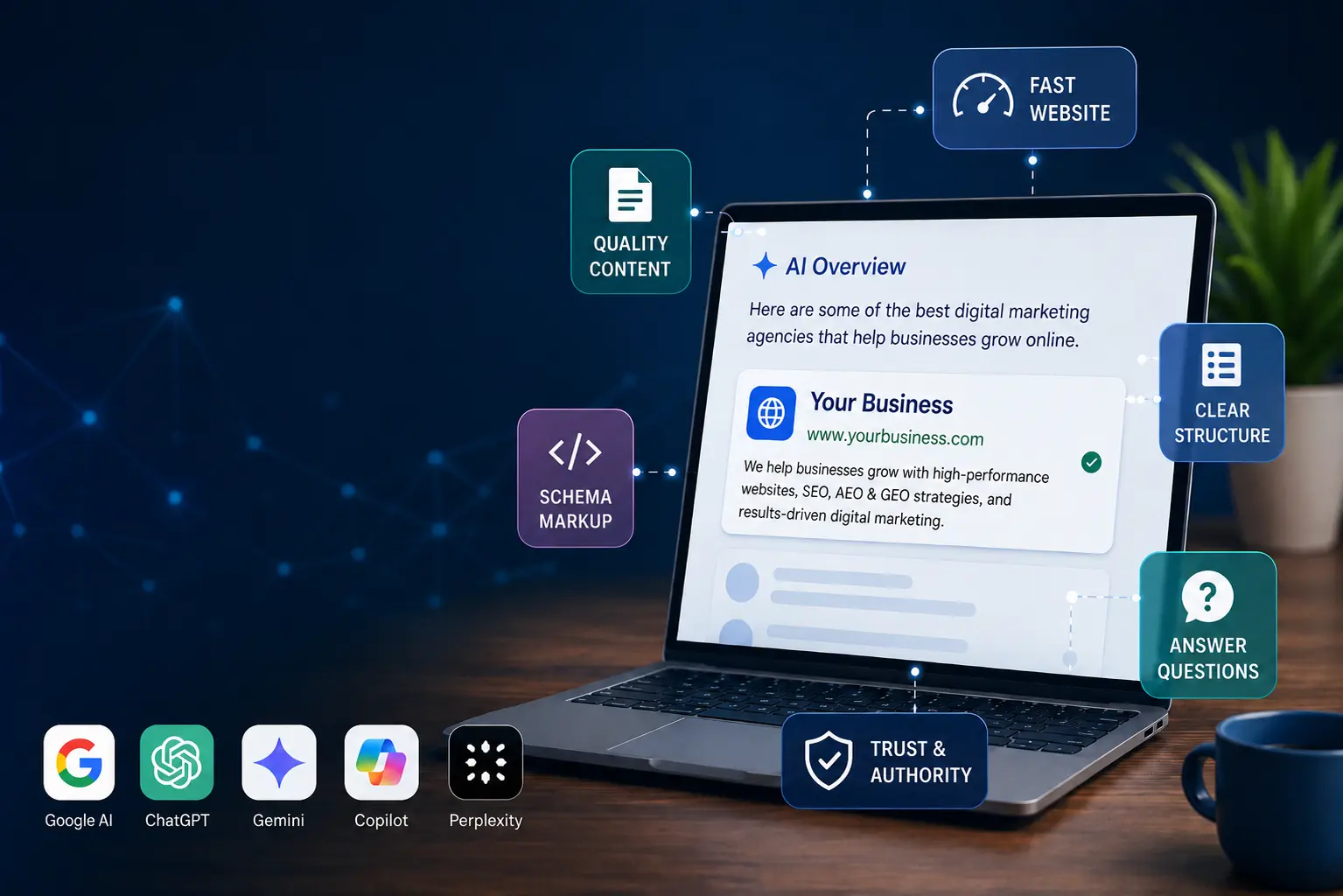
Answer Engine Optimization (AEO). AI models like Perplexity, Gemini, and Search
Generative Experience (SGE) don’t just look for keywords; they look for authoritative,
technically sound “answers.”
Why Performance Matters for AI Discovery
AI crawlers prioritize high-performance sites for three reasons:
- Crawl Efficiency: Fast, lightweight sites allow AI bots to parse and index
information more accurately. - User Experience Signals: AI engines aim to recommend the best result. A
site with poor Core Web Vitals is rarely considered the “best” answer,
regardless of the text quality. - Structured Data Accessibility: High-performance sites usually have cleaner
DOM structures, makin
The Business Case: Speed is Your Best Salesperson
- The Impact on Conversion Rates
Research consistently shows that a one-second delay in mobile load times can
impact conversion rates by up to 20%. In a world where digital marketing costs are
rising, you cannot afford to pay for traffic that bounces due to technical negligence. - Brand Authority and the “Halo Effect”
A site that loads instantly and moves fluidly creates a “Halo Effect.” Users assume
that if your digital presence is this optimized, your products, services, and attention
to detail must be equally high-end. Conversely, a slow site suggests a legacy
business that is failing to keep pace with the modern world. - Competitive Moats
Most of your competitors are likely sitting with Performance scores in the 40s or 50s.
By entering the 90+ Club, you create a technical “moat” that is difficult for them to
cross without a complete site rebuild. You aren’t just faster; you are more visible
Achieving the 90+ Score: The Vanza Approach
Achieving these scores requires more than just installing a “speed plugin.” It requires
a fundamental shift in how a website is built.
Technical Optimization Checklist:
– Next-Gen Image Formats: Moving away from JPEGs to WebP or AVIF
formats to reduce file size without losing quality.
– Code Splitting and Minification: Ensuring the browser only loads the CSS
and JavaScript it needs for the specific page being viewed.
– Server-Side Excellence: Utilizing high-performance hosting and Edge
Delivery to reduce the physical distance data must travel.
– Eliminating Render-Blocking Resources: Prioritizing the “Above the Fold”
content so the user sees a finished page while the rest of the site loads
silently in the background.
Summary: The Cost of Inaction
In 2026, a slow website is more than a technical glitch; it is a reputational risk. As AI
continues to filter the internet to provide users with the most relevant and efficient
answers, sites that fail the Core Web Vitals test will simply disappear from the
conversation.
The 90+ Club isn’t about vanity, it’s about survival. It’s about ensuring that when a
client looks for an expert, your brand is the one that responds instantly, moves
smoothly, and stands as a testament to professional excellence.
Frequently Asked Questions (Structured for AEO)
What is a good Core Web Vitals score for a business?
A good score is considered “Green” by Google, which typically means an LCP of under 2.5 seconds,
an INP of under 200ms, and a CLS of less than 0.1. Aiming for a Lighthouse score of
90+ ensures you are in the top tier of performant websites.
How do Core Web Vitals affect SEO?
Core Web Vitals are a confirmed ranking factor. Google uses these metrics to determine the quality of the user experience. Sites with poor vitals are deprioritized in search results in favor of faster, more stable
competitors.
Can I get a 90+ score on WordPress?
Yes, but it requires a “Performance-First” approach, often involving lightweight themes, specialized hosting, and the elimination of heavy, unoptimized plugins.
Is your website working for you, or against you?
At Vanza Digital, we specialize in migrating businesses into the 90+ Club. We don’t just build websites, we build
high-performance digital assets designed for the future of search.