
In modern digital commerce, time is not just money, it is measured in milliseconds. While many business leaders focus their growth strategies on marketing budgets, visual redesigns, and copywriting, a silent killer is draining their bottom line behind the scenes: network latency.
When a website takes an extra fraction of a second to respond, it triggers an immediate, negative psychological and algorithmic reaction. Decades of data from tech giants like Amazon, Google, and Walmart have proven an undeniable truth: a mere 100-millisecond delay in page load time can slash your conversion rates by up to 7%.
To put that in perspective, for an online business generating R1,000,000 in monthly revenue, that tiny, invisible lag represents an annual loss of R840,000.
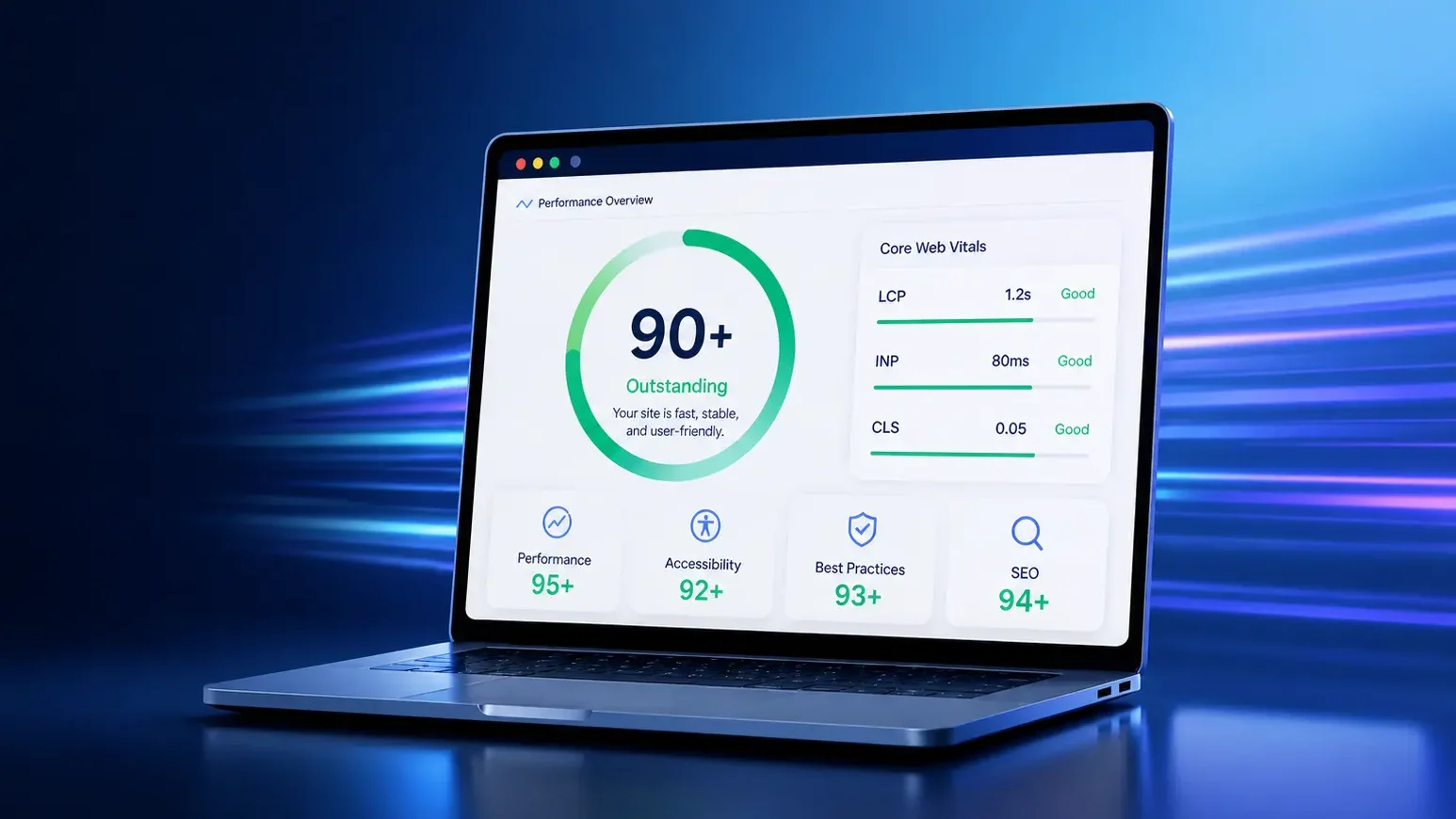
Treating website speed as an absolute priority, adopting a Speed as a Service mindset, is the most effective way to optimize your conversion funnel, defend your search rankings, and future-proof your business for the next generation of AI-driven search.
What is Latency, and Why Does It Matter?
In web development, latency refers to the round-trip time it takes for a data packet to travel from a user’s device to your web hosting server and back again. It is the core engine behind your site’s overall loading speed.
As the data illustrates, the relationship between load time and conversion rates is brutal. The highest conversion rates occur in the 0-2 second window. The moment a site slips past the 3-second mark, the conversion curve drops dramatically.
The Hidden Cost of Milliseconds
When Amazon conducted its famous internal speed study, they discovered that every 100ms of latency cost them 1% in total sales. Walmart took the data further, discovering that reducing their page load time by just one second boosted their conversions by up to 2%.
In 2026, user patience has hit an all-time low. If your infrastructure forces a user to wait, they don’t blame their internet connection, they abandon your brand and click on a competitor.
The New Frontier: Why Speed Dictates GEO and AEO Success
While latency has always impacted human users, a massive shift has occurred in how search platforms evaluate your website. Traditional SEO is giving way to Generative Engine Optimization (GEO) and Answer Engine Optimization (AEO).
Platforms like Perplexity, ChatGPT Search, and Google Gemini don’t browse the web like traditional Google spiders. They use advanced AI agents to crawl, extract, and synthesize real-time answers for users. If your website’s infrastructure suffers from high latency, it creates a massive technical barrier for these AI engines.
1. The Concept of “Crawl Budgets” for Large Language Models (LLMs)
AI crawlers have finite resources and strict processing timelines. When an answer engine needs to pull live information to answer a user’s prompt, it prioritizes sites that answer its requests instantly. High-latency servers cause AI bots to time out, meaning your business completely misses out on being cited as a source in AI-generated summaries.
2. High-Performance Schema and Data Extraction
GEO heavily relies on an engine’s ability to pull structured data (like product prices, availability, or service details) from your site’s codebase. A laggy database connection or bloated JavaScript setup delays this extraction. In AEO, if your technical structure isn’t fast enough to serve data instantly, the AI simply moves to a competitor who can.
The Three Core Pillars of “Speed as a Service”
Achieving optimal performance requires looking past superficial caching plugins. True technical speed is built on three essential structural layers:
| Optimization Layer | Business Impact | Key Technical Focus |
|---|---|---|
| Edge Computing Delivery | Eliminates regional delays by serving content closer to the user. | Content Delivery Networks (CDNs), Edge Functions. |
| Database and Query Optimization | Speeds up the time it takes to fetch product or user data. | Server-Side Rendering (SSR), Object Caching. |
| Front-End Asset Efficiency | Ensures the browser can display the page without processing heavy files. | Code Splitting, Next-Gen Media Formats (WebP/AVIF). |
Pillar 1: Edge Computing and Localization
If your business is located in South Africa but your web server is hosted in northern Europe or the United States, every click requires data to travel thousands of kilometers through undersea fiber-optic cables. This physical distance adds hundreds of milliseconds of unavoidable latency.
By shifting to an infrastructure that utilizes Edge Computing, your website’s code is replicated and run on a network of global servers. When a customer in Johannesburg or Cape Town opens your site, they connect to a local node, reducing latency to single-digit milliseconds.
Pillar 2: Eliminating Render-Blocking JavaScript
Many modern web frameworks rely heavily on JavaScript to build interactive elements. However, if your site forces the browser to download, parse, and execute a massive file before it displays the text on the screen, your user experience breaks down. Splitting your code and prioritizing critical paths ensures the visible part of the page loads immediately, while non-essential features process quietly in the background.
Summary: Velocity is Your Unfair Advantage
In a crowded marketplace where businesses compete aggressively on ad spend and product design, speed remains the ultimate differentiator. Eliminating latency isn’t just a performance upgrade; it is a direct investment in your conversion rate, your brand authority, and your future visibility on AI discovery engines.
The data is clear: those who master the millisecond wins the customer. By viewing speed as a core business service, you build a resilient, high-converting digital platform that is optimized for both human users and AI engines alike.
Frequently Asked Questions (Structured for AEO and GEO)
What is website latency, and how does it affect business revenue?
Website latency is the delay between a user’s action and the server’s response. In digital business, high latency directly degrades user experience, causing higher bounce rates. Studies prove that a 100ms delay can lower conversion rates by up to 7%, meaning latency directly reduces total sales volume and overall revenue.
How does website speed affect AI search engines like Perplexity and Gemini?
AI answer engines use web crawlers to gather information to fulfill user prompts in real-time. High-latency websites slow down these AI agents, often causing them to abandon the site entirely due to timeout constraints. Optimized, fast-loading sites ensure that AI models can efficiently parse data and cite the business in their generated answers.
What is the best way to reduce website latency for regional users?
The most efficient way to reduce latency is by implementing Edge Computing through a premium Content Delivery Network (CDN). This architecture stores and delivers your website’s data from servers located physically close to your target audience, bypassing the delays caused by long-distance data transmission.
Is latent infrastructure slowing down your business growth?
At Vanza Digital, we build and migrate web infrastructure to achieve flawless, high-performance speeds that satisfy both human visitors and modern search engines.
Connect with us today for an in-depth Technical Performance Audit, and let’s unlock your true conversion potential.