

In today’s fast-moving digital economy, a website is rarely just an online business
card. For most organizations, it serves as the primary storefront, chief salesperson,
and core hub for customer acquisition. Yet, a massive gap exists between what
modern web users expect and what standard agency websites actually deliver.
Many business owners invest heavily in custom design, high-resolution imagery, and
paid ad campaigns, only to wonder why their conversion rates remain frustratingly
low. The underlying problem is often hidden in plain sight: sub-optimal loading
speeds, bloated code architectures, and a total reliance on legacy SEO strategies
that fail to satisfy modern AI search engines.
At Vanza Digital, we look at web development through a practical business lens. A
modern website shouldn’t just look visually appealing, it must operate as a precision
revenue engine. Here is a breakdown of why web performance has become the
ultimate differentiator for businesses and how modern technical optimization
converts digital presence into tangible revenue.
- Speed Is a Revenue Metric, Not Just a Technical Detail
When potential clients visit your website, their attention span is measured in
milliseconds. Modern users have developed zero tolerance for lag, slow-loading
assets, or layout shifts. Industry benchmarks consistently demonstrate the direct
relationship between page load speeds and bottom-line revenue:
– 0–2 Seconds: The optimal load time window where conversion rates hit their
absolute peak.
– The 3-Second Threshold: Over 53% of mobile visitors abandon a site
entirely if it takes longer than three seconds to load.
– The Bounce Rate Cascade: As page load time increases from 1s to 3s, the
probability of a bounce increases by 32%. From 1s to 5s, that probability
jumps to a staggering 90%.
The Real Impact of Speed:
Speed is not an arbitrary metric evaluated only by developers. Every fraction of a
second added to your page load time represents lost qualified prospects, abandoned
contact forms, and wasted ad spend.
When you run digital ad campaigns or spend money on search marketing, directing
paid traffic to a slow website is equivalent to leaking marketing dollars. Modern web
performance engineering eliminates unnecessary code overhead, optimizes critical
rendering paths, and ensures that your site loads instantly on every device. - Beyond Traditional Search: Conquering AI & Answer Engines
For two decades, Search Engine Optimization (SEO) was straightforward: target
high-volume keywords, write long-form articles, and build backlinks to secure a spot
on page one of Google. While organic search remains essential, the way people find
information has undergone a massive structural shift.
Today, prospective clients are increasingly relying on AI-driven platforms like
ChatGPT, Perplexity, Google Gemini, and Microsoft Copilot to find service providers,
compare options, and make buying decisions. This shift has birthed two new
disciplines that go hand-in-hand with traditional web performance:
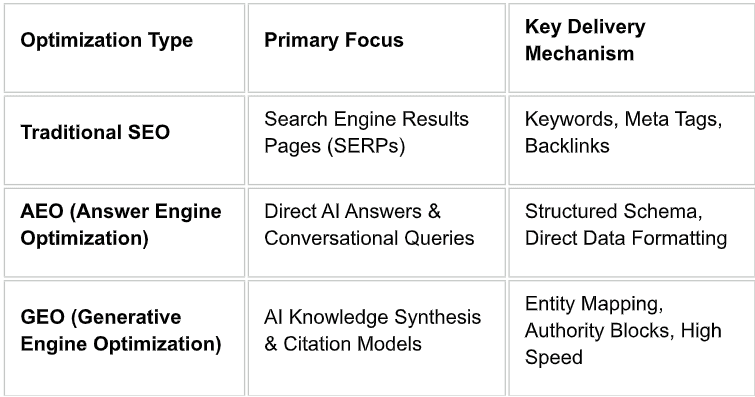
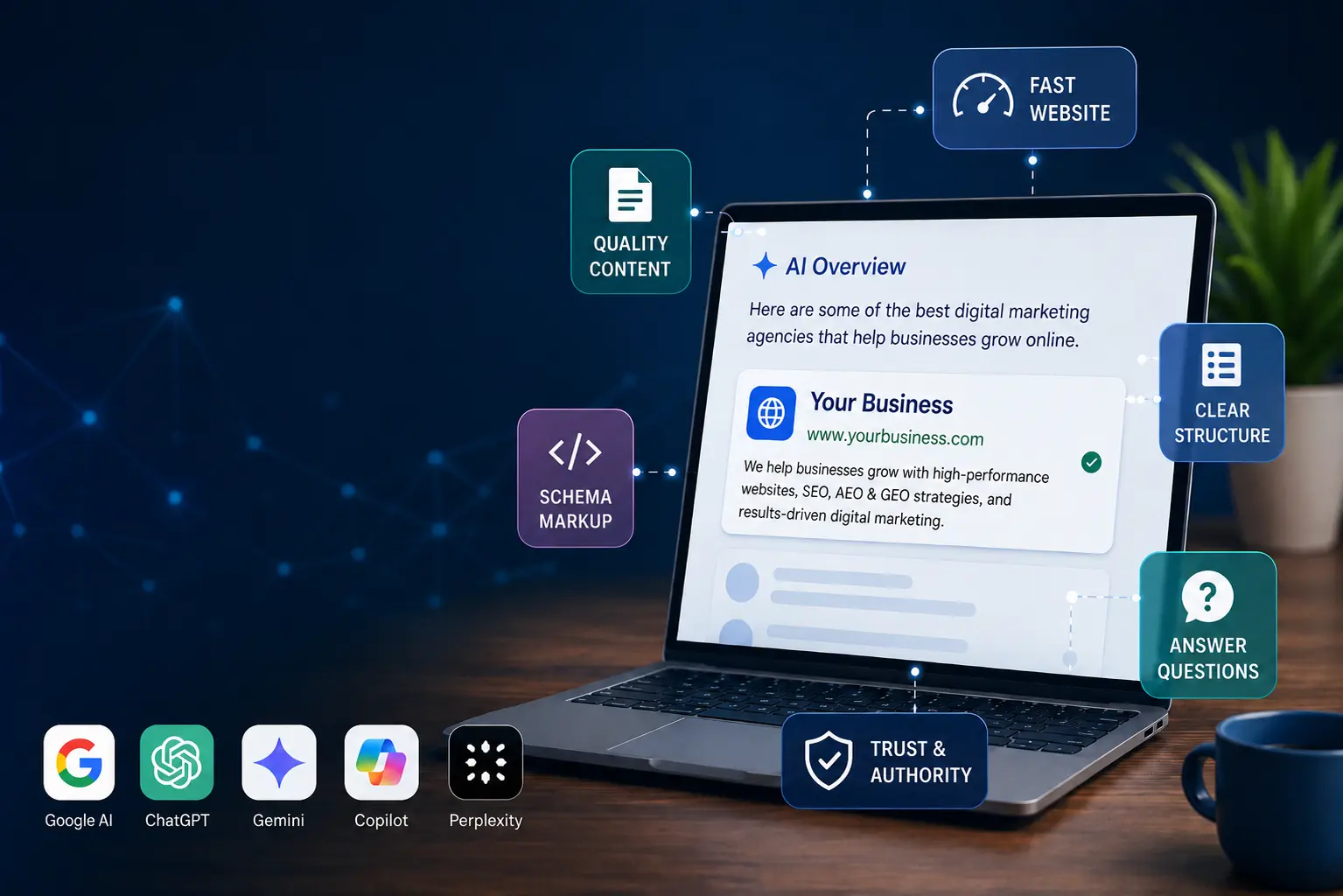
AI models prioritize websites that serve clear, structured, and lightning-fast data. If
your website architecture is convoluted or lacks clean structured markup, modern
generative search engines simply pass over your business when synthesizing
recommendations for user prompts.
By engineering sites with strict adherence to Core Web Vitals and rich schema
markups, Vanza Digital ensures your brand is indexed, recognized, and
recommended across both traditional search engines and next-generation AI
platforms.
- The High Cost of Bloated Legacy Builds
Many growing businesses fall into the trap of visual legacy builds, websites
constructed on bloated templates with dozens of heavy plugins stacked on top of
one another. While these sites might look acceptable during an initial preview, their
underlying performance tells a completely different story under real-world testing.
Common issues found in legacy builds include:
– Excessive Third-Party Scripts: Unoptimized tracking pixels and plugin
scripts that block the browser from displaying main content quickly.
– Uncompressed Assets: Oversized visual assets that drain mobile data and
slow down execution speeds.
– Cumulative Layout Shift (CLS): Unstable page layouts that jump around as
elements load, creating a frustrating experience for mobile users.
– Fragmented Security: Unused or outdated plugins that create vulnerabilities
and slow down server response times (TTFB).
A web performance re-engineering project strips away this digital friction. By clean-
coding presentation layers, leveraging modern lightweight content frameworks, and
utilizing modern delivery networks, we transform sluggish platforms into streamlined
operational assets.
- Enterprise-Grade Performance Without the Enterprise Price Tag
Historically, achieving sub-second load times, flawless security, and specialized AI
search optimization required a multi-hundred-thousand-dollar engineering budget
and a massive full-time dev team. Large tech enterprises understood this competitive
edge and used it to dominate market share.
At Vanza Digital, our core mission is democratizing this exact technology for small,
medium, and growing enterprises. We utilize modern, lean workflows, including agile
static environments, automated deployment pipelines, and cutting-edge web
optimization frameworks to deliver enterprise-grade performance at a realistic, value-
driven investment level.
The Vanza Digital Advantage:
We don’t build generic web pages. We craft high-speed digital architectures
designed specifically to lower user acquisition costs, raise conversion efficiency, and
protect your long-term organic discovery. - How to Evaluate Your Current Web Performance
If you aren’t sure where your current website stands, there are simple, measurable
ways to test your performance today. You can evaluate your platform against three
key parameters:
1. Mobile Load Speed: Test your homepage on standard 4G mobile
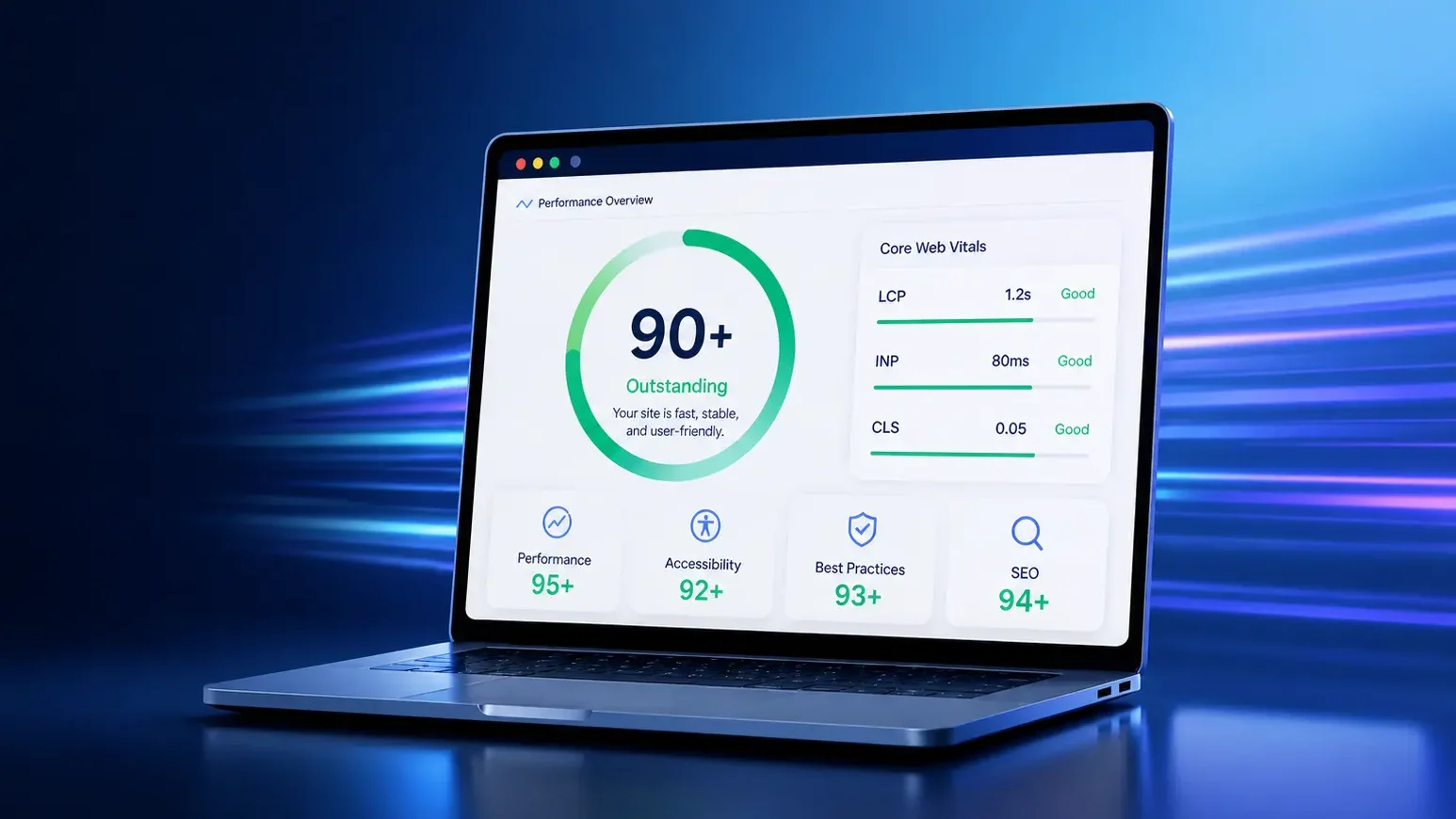
connections using free tools like Google PageSpeed Insights. Look closely at
your Performance score and Largest Contentful Paint (LCP).
2. Conversion Path Friction: Count how many clicks and seconds it takes for a
first-time visitor to find your key service offer and submit a contact request.
3. AI & Search Visibility: Search for your primary service offering inside AI
answer tools (e.g., Perplexity or ChatGPT) to see if your brand is being
synthesized into direct recommendations.
Ready to Audit Your Web Performance?
Your website should be actively driving business growth, not holding it back. At
Vanza Digital, we help businesses uncover site bottlenecks and implement high-
impact performance optimizations.
Reach out to Vanza Digital today for a complimentary, comprehensive Web Performance & Speed Diagnostic for your business.